Most self-improvement apps sell quick wins. The problem is what happens after that initial motivation fades. Real, meaningful growth takes more than a few weeks of effort. It requires a plan built for the long haul—for consistency, routine, and integrating new skills into daily life.
This article is for anyone tired of temporary fixes. First, we’ll define what sustainable self-improvement actually means. Then, we’ll review four platforms designed specifically to support this longer, more permanent type of change.
What Defines Long-Term Self-Improvement
True, lasting self-improvement requires a shift in approach. It’s a continuous effort built on sustainable change.
Its main principles are:
- Consistency over intensity.
- Balanced, holistic development.
- Focus on the daily process.
- Willingness to adapt your strategy.
- Making new skills part of your identity.
Effective apps for this provide a structured framework, tools for reinforcement, and pacing designed for long-term engagement.
The Best Self-Improvement Apps for Sustained Progress
Real progress isn’t about how you start. It’s about what you do when the initial excitement fades. You need a reliable system, something that keeps you moving forward even on days you don’t feel like it.
The apps here are built for exactly that. Each one offers a different kind of structure designed to help build habits that last.
1. RiseGuide
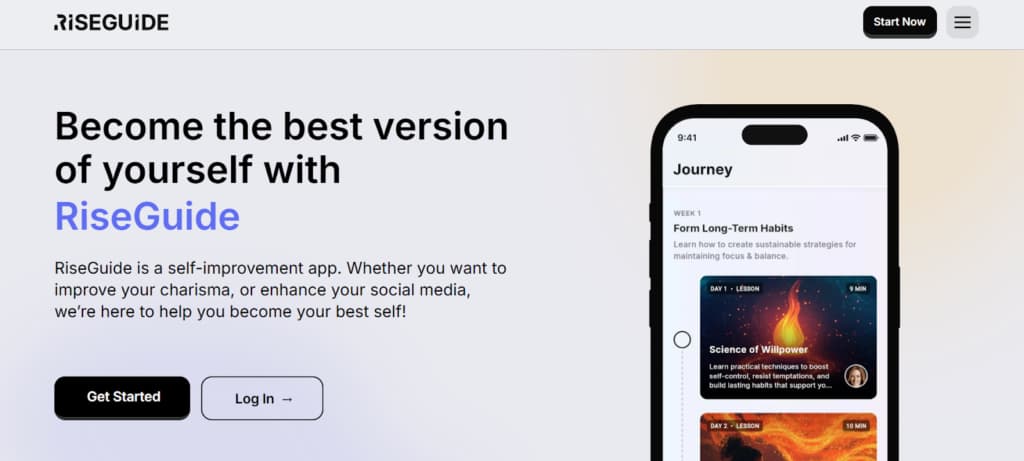
RiseGuide is a self-improvement app. It uses short daily lessons instead of long study blocks. Covers communication, confidence and charisma, audience growth, intelligence, and memory. You pick one main area to focus on or mix a few. Lessons draw from neuroscience, behavioural psychology, productivity research, and real experience.
SEEK, the platform’s dedicated search engine for expert knowledge, allows users to query specific topics and obtain answers grounded in reliable research and professional insight.
Supplementary tools include daily to-dos, reinforcing quizzes, video materials, downloadable workbooks, flashcards, and more, all intended to facilitate the practical application of learning into ongoing routines.
Pros
- Builds sustainable growth via daily micro-learning + habit tracking.
- Extensive collection of condensed, actionable expert advice in one searchable spot.
- Heavy focus on practice: interactive exercises and ready templates.
- Clear guided learning paths for structured users.
Cons
- Demands real daily commitment and consistency to work.
- Overwhelming setup and content volume for beginners.
- Pre-made content feels personalized but doesn’t fit everyone perfectly.
- Progress is slow — can frustrate people wanting fast results.
2. Mindvalley
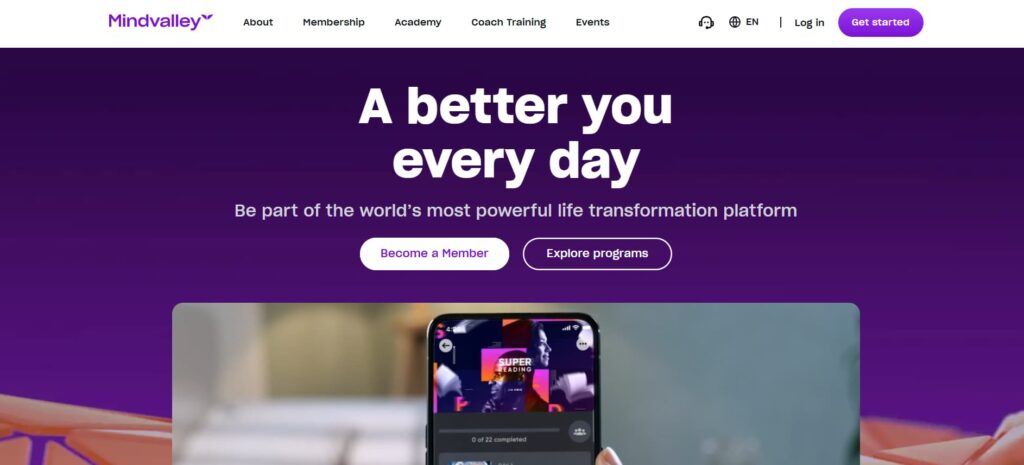
Mindvalley centers on personal development through structured daily learning. Its primary offering is called Quests. These are multi-week programs featuring daily sessions under 20 minutes, combining video, audio, and interactive exercises. Topics cover a broad range, including mindset, health, relationships, career, and entrepreneurship.
Beyond the Quests, the platform provides guided meditations, a community forum where members connect globally, and various tools meant to reinforce new habits. The overall design pushes for steady daily use. The idea is that small, consistent input leads to actual changes in behavior over time.
Unlike standard course libraries, Mindvalley uses high-quality production, motivational techniques, and community features to create a more engaging experience. It also offers Mindvalley Business for workplace and leadership development.
Pros
- High-production videos led by recognized wellness/personal dev experts.
- Daily Quest structure supports consistent, engaging practice.
- Strong, supportive global community.
- Broad coverage of holistic growth areas.
- Actionable and practical lesson design.
Cons
- High-cost annual subscription, no individual course purchases.
- Emphasizes soft skills over technical or academic topics.
- A very large library can overwhelm or lack clear direction.
- Certain content is seen as abstract or light on evidence.
- Reports of app issues and inconsistent support.
3. Studio.com
Studio.com provides a platform dedicated to learning creative skills via guided, outcome-oriented projects. Its primary format is the 30-day workshop.
Users build a single, finished creative piece — such as a song, short film, or photo collection — following daily video instruction from experienced creators. Every day delivers one focused lesson plus a corresponding assignment rooted in established industry practices. The approach prioritizes direct application and skill-building through doing.
Participants are grouped with others working on similar projects. Within these groups, students post updates, review each other’s work, and provide feedback. The shared environment encourages interaction and helps maintain momentum.
This structure is ideal for learners who benefit from defined steps, clear daily tasks, and the motivation of finishing a complete creative project.
Pros
- Learn straight from famous industry experts.
- 30-day format: project-based, deadlines, and real finished work.
- Strong cohort community + peer critiques.
- High-quality, easy-to-watch pro videos.
- Usually a quick refund window.
Cons
- High cost (hundreds per class).
- Locked into group schedule — not flexible/self-paced.
- Better for inspiration & structure than advanced technical depth.
- You build their project, not your own idea from scratch.
4. Masterclass
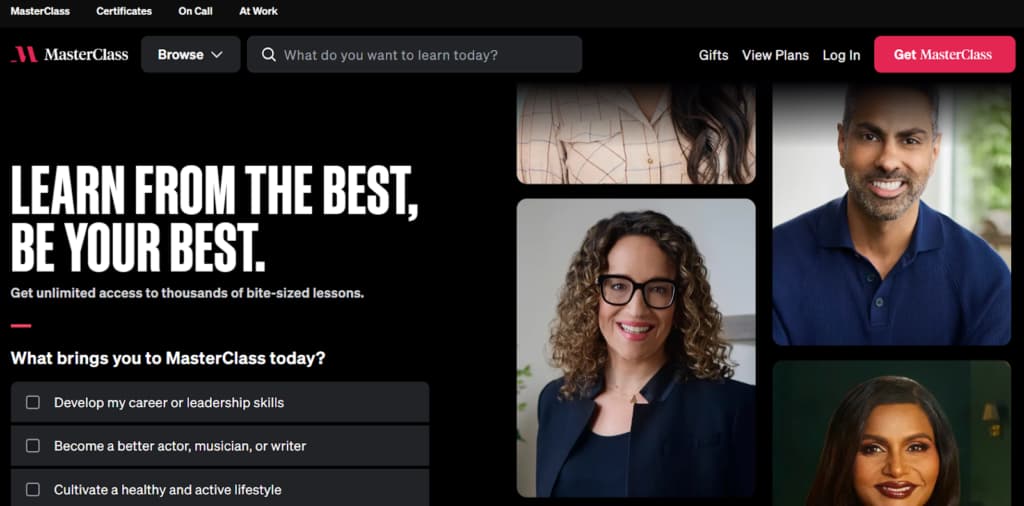
MasterClass operates on an annual subscription model that provides access to its full collection of premium video courses taught by prominent people in various industries — authors, chefs, executives, and athletes.
Courses consist of concise video segments with high production quality. Instructors present their experiences, show how they perform tasks, and discuss broader principles related to their work.
Streaming is available across devices with flexible pacing. Supplementary PDF workbooks are often provided for most classes.
The platform also offers more structured certificate programs in partnership with institutions for those seeking defined outcomes. The value proposition centers on learning the mindsets, creative processes, and foundational principles from world-class experts.
Pros
- Direct teaching from world-class masters & celebrities.
- Focus on long-term mindset, philosophy, and core habits (not quick hacks).
- Short, high-quality segments perfect for daily bites.
- Broad topics for personal + professional growth.
- High production quality helps maintain attention.
Cons
- More inspiration and big ideas than step-by-step how-to.
- No personalized paths, tracking, or skill-level adjustments.
- Better for passive motivation than active skill-building/accountability.
- Annual subscription required, even for just a couple of courses.
Who These Apps Are Best Suited For
These platforms are a strong fit for individuals dedicated to gradual, sustained improvement.
Best suited for:
- Lifelong learners who pursue continuous skill development.
- Habit-builders who need systems to establish and maintain daily routines.
- Seekers of clarity are looking for a structured, methodical path forward.
- Inspired followers who are motivated by learning directly from experts.
- Project-oriented creators who want to learn by completing hands-on work.
- Busy professionals who require concise, adaptable learning formats.
They are tools for building progress that lasts, not just for short-term motivation.
Conclusion
Ultimately, real progress means making learning part of your routine for good. The apps we’ve discussed each offer a system to help you do that—through daily structure, deep immersion, hands-on projects, or direct access to experts.
Your choice comes down to your personal goals and how you learn best. The key is to pick the one that fits your life, because they’re all designed to support you well past the starting line.